You feel the steering pull, hear a flapping sound, and the tire pressure light comes on, right in the middle of rush hour on I-694. A flat tire on a busy Twin Cities freeway is stressful, and the moments after it happens matter more than the tire itself. Here's how to handle it safely.
Step 1: Don't slam on the brakes
When a tire goes flat at speed, hold the steering wheel firmly with both hands, ease off the gas, and let the car slow down gradually. Hard braking or a sudden swerve is what turns a flat into an accident. Turn on your hazard lights as soon as you can.
Step 2: Choose where you stop
Driving a short distance on a flat at low speed can ruin the tire or even the wheel, but your safety comes first. If you can, get to:
- The next exit ramp and a side street or parking lot
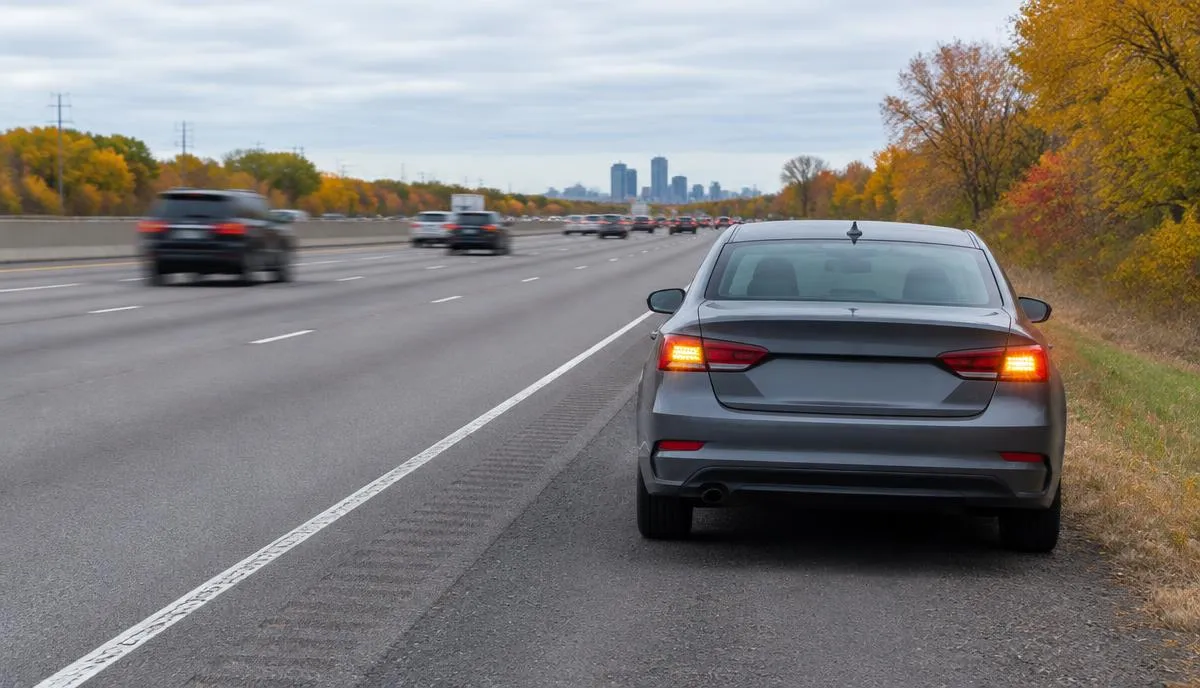
- A wide right shoulder, as far from traffic as possible
- A spot where other drivers can see you from a distance, not right after a curve or a hill crest
Avoid stopping on the left shoulder of a freeway if you can; it's often narrow and puts you right next to the fastest lane.
Step 3: Make your car visible
- Hazard lights on, always.
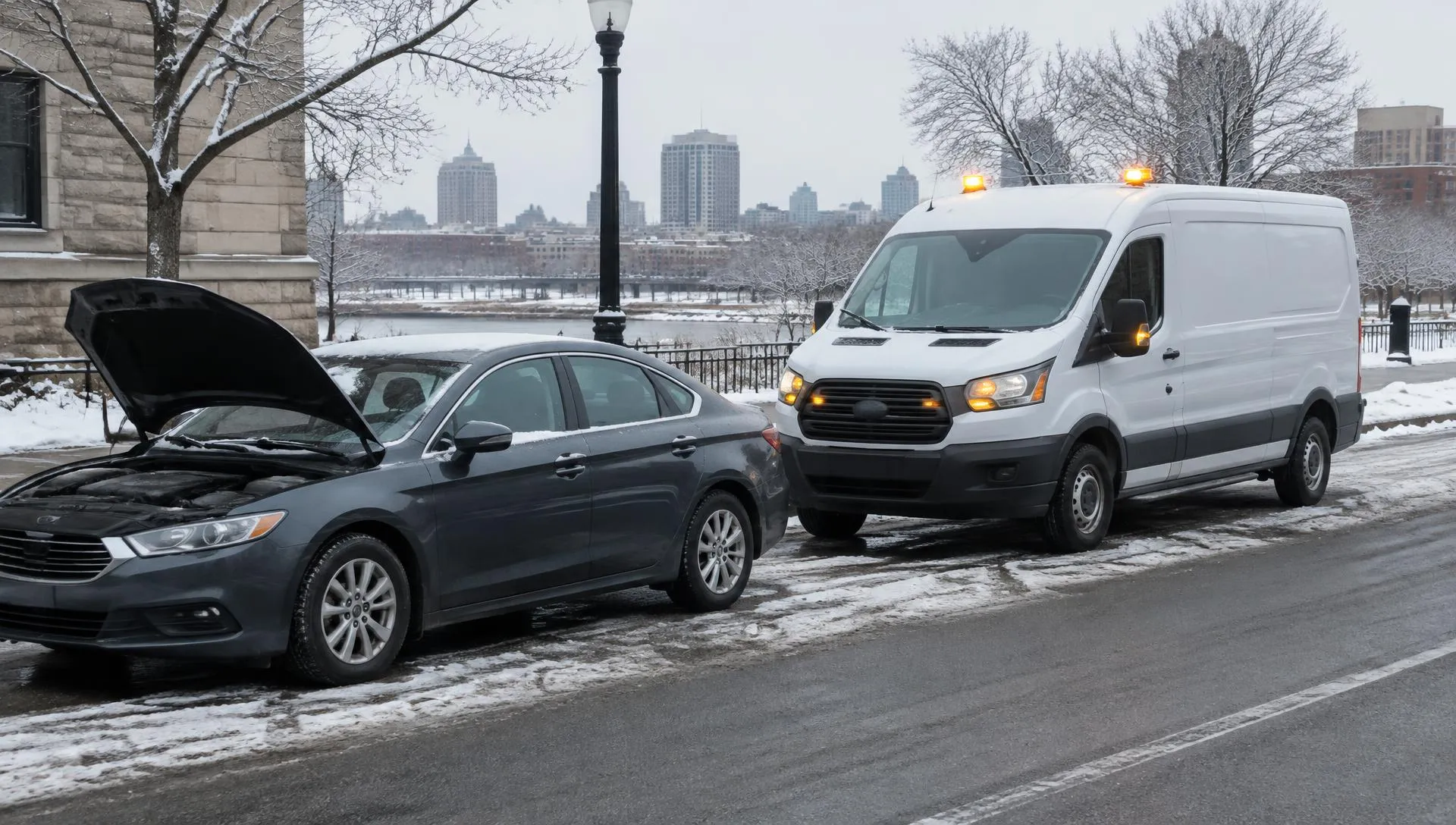
- At night or in snow, turn on interior lights so other drivers can see the car is occupied.
- If you have reflective triangles and can place them safely, set them behind the car. Don't walk along a busy freeway shoulder to do it.
Step 4: Decide where to wait
On a busy freeway shoulder, the safest place is often inside the car with your seat belt on, away from the traffic side. If there's a guardrail and a safe area beyond it, getting yourself and passengers behind the guardrail can be safer still. Never stand between your car and traffic, and keep kids and pets inside unless moving them is clearly safer.
Why changing a tire on a busy shoulder is risky
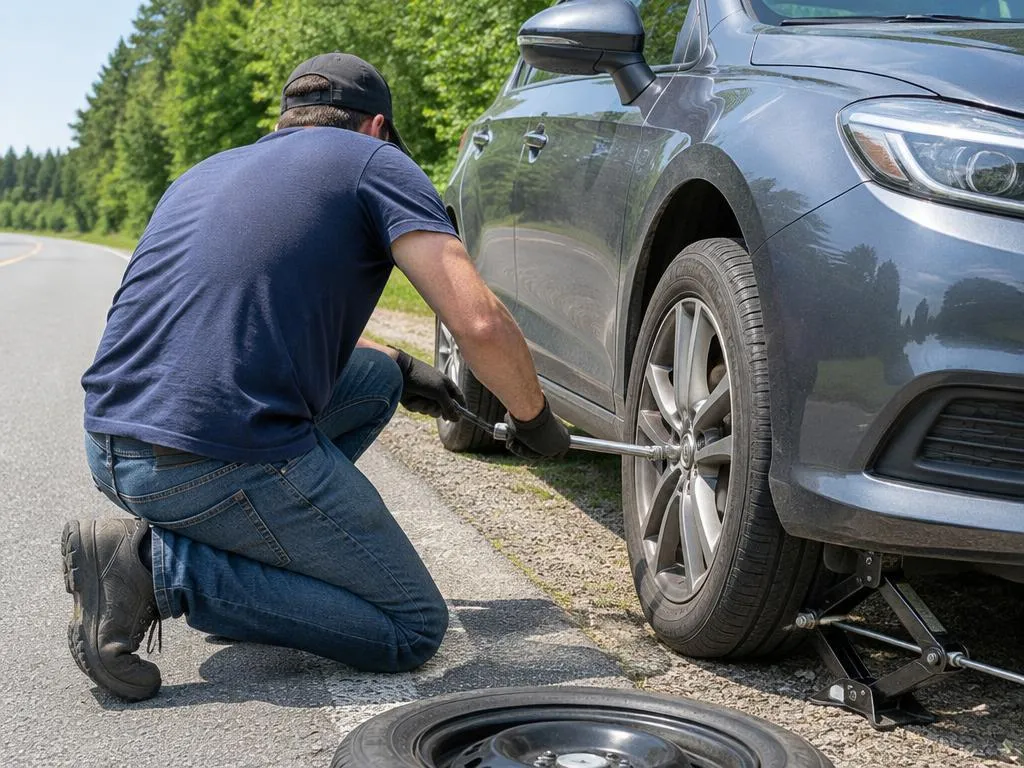
Changing a tire means kneeling next to the car with your back to traffic, sometimes with a car on a jack on a slope or in slush. Drivers who are distracted, or who misjudge the shoulder in snow, can come very close. If you're on a narrow shoulder with heavy traffic, it's often better to call for help and wait safely than to do the job yourself.
The Move Over habit
Minnesota's Move Over law requires drivers to move over a lane, or slow down if they can't, for stopped emergency vehicles with flashing lights. Many drivers make it a habit for any vehicle on the shoulder, and it's a good one. When you're the one passing someone stuck on the shoulder, move over if it's safe.
What to tell us when you call
- Which highway and direction you're heading (for example "I-694 eastbound")
- The nearest exit, mile marker, or landmark you can see
- Which side of the road you're on
- Your vehicle and color
- Whether you have a usable spare and a wheel-lock key (if your car has locking lug nuts)
Change or repair?
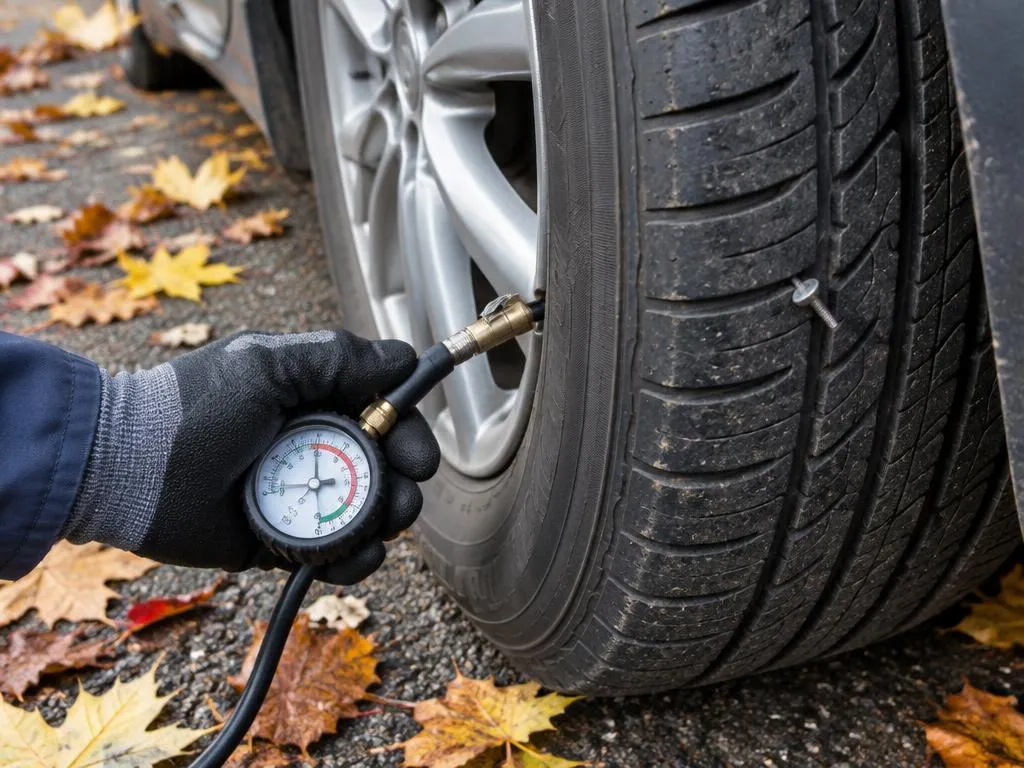
If you have a usable spare, we'll install it so you can get to a tire shop. See Flat Tire Change. If the damage is a small nail or screw in the tread, a mobile tire repair may get you going without the spare. Sidewall damage, big cuts, or a tire that was driven flat for a while means the tire needs replacing.
After the spare is on
Compact spares are made for short distances at reduced speed. Check the sidewall of your spare for its limits and get the flat repaired or replaced soon. Don't leave a donut on for weeks.
UK Roadside covers the north metro freeways and the cities along them, Monday through Friday from 6 AM to 10:30 PM. Call (855) 799-4711.