It's the first frosty morning of the season, you start the car, and the yellow tire symbol lights up on the dash. You walk around the car and every tire looks fine. This happens to a lot of Minnesota drivers every fall, and most of the time the cold is the reason. But sometimes it's a real leak, and knowing the difference matters.
What the light means
That yellow symbol (a horseshoe shape with an exclamation point) is your Tire Pressure Monitoring System, or TPMS. It turns on when one or more tires drop well below the recommended pressure. A tire can lose a good amount of air before it looks flat, which is exactly why the system exists.
- Light stays on: at least one tire is low.
- Light flashes for about a minute, then stays on: usually a problem with the TPMS system itself (like a sensor battery), not just low pressure.
Why cold drops your tire pressure
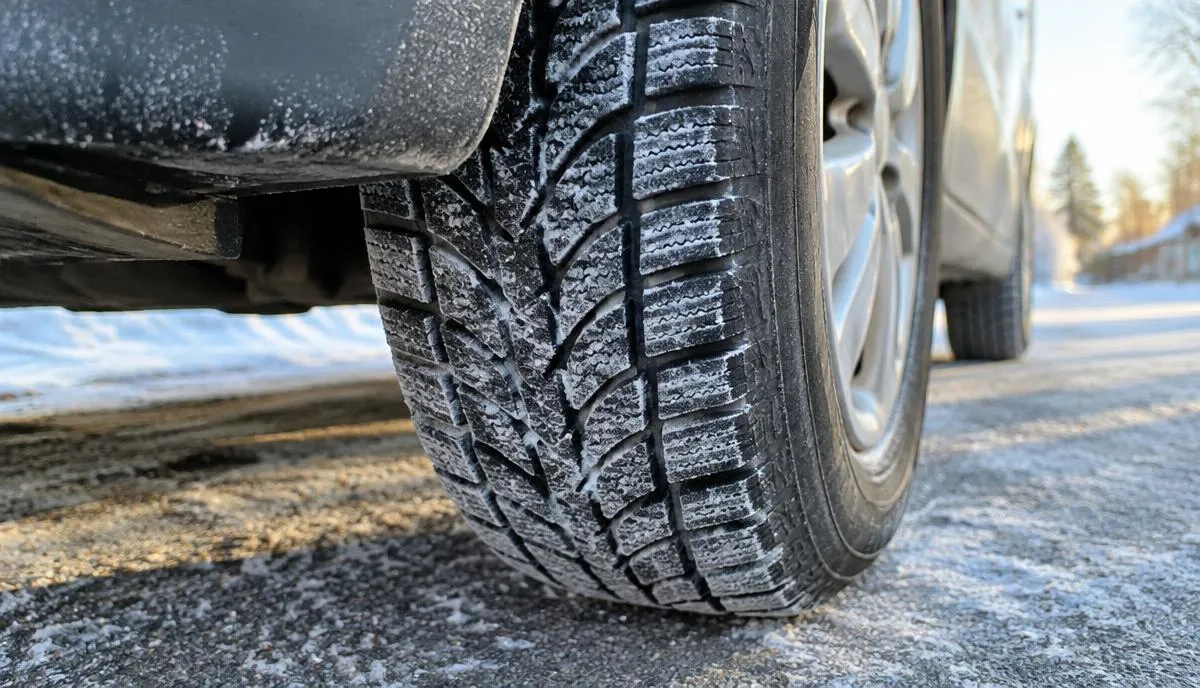
Air shrinks when it gets cold. As a rough rule, tire pressure drops about 1 PSI for every 10°F the temperature falls. So a tire set to the right pressure on a 60°F afternoon can be several PSI low on a 10°F morning, enough to trigger the light. As the tires warm up from driving, the pressure rises and the light may turn off on its own. That's a sign the tires were already borderline low.
How to check your pressure the right way
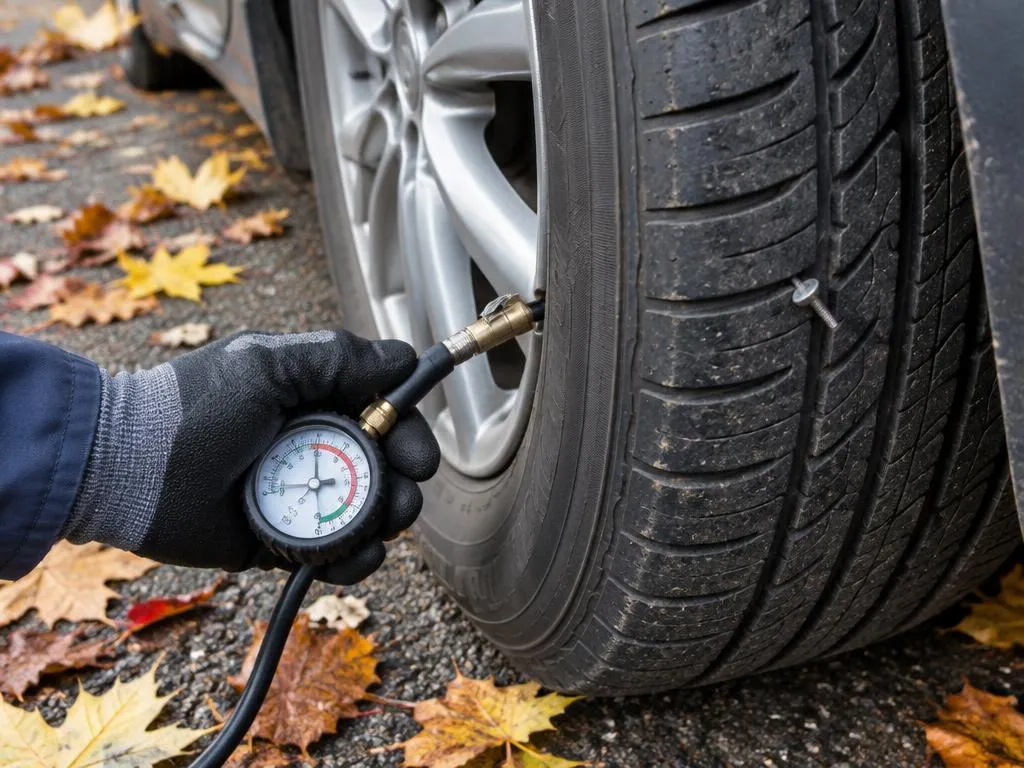
- Find the right number. It's on the sticker inside the driver's door jamb, not the number molded on the tire's sidewall (that's the maximum, not the target).
- Check them cold. Measure before driving, or after the car has sat for a few hours.
- Use a gauge. A simple pencil or digital gauge is inexpensive and worth keeping in the glovebox.
- Add air to the door-jamb number. Many gas stations have air pumps.
- Don't forget the spare, if your car has one.
When it's not just the cold
- One tire is much lower than the others
- The light comes back within a day or two after you've filled the tires
- You hear hissing or see a nail, screw or cut
- The car pulls to one side
- The tire looks visibly low or bulging
These point to a puncture or leak. In Minnesota, slow leaks also often come from the valve stem, or from the bead (where the tire meets the rim) when road salt has corroded the wheel.
What to do about a real leak
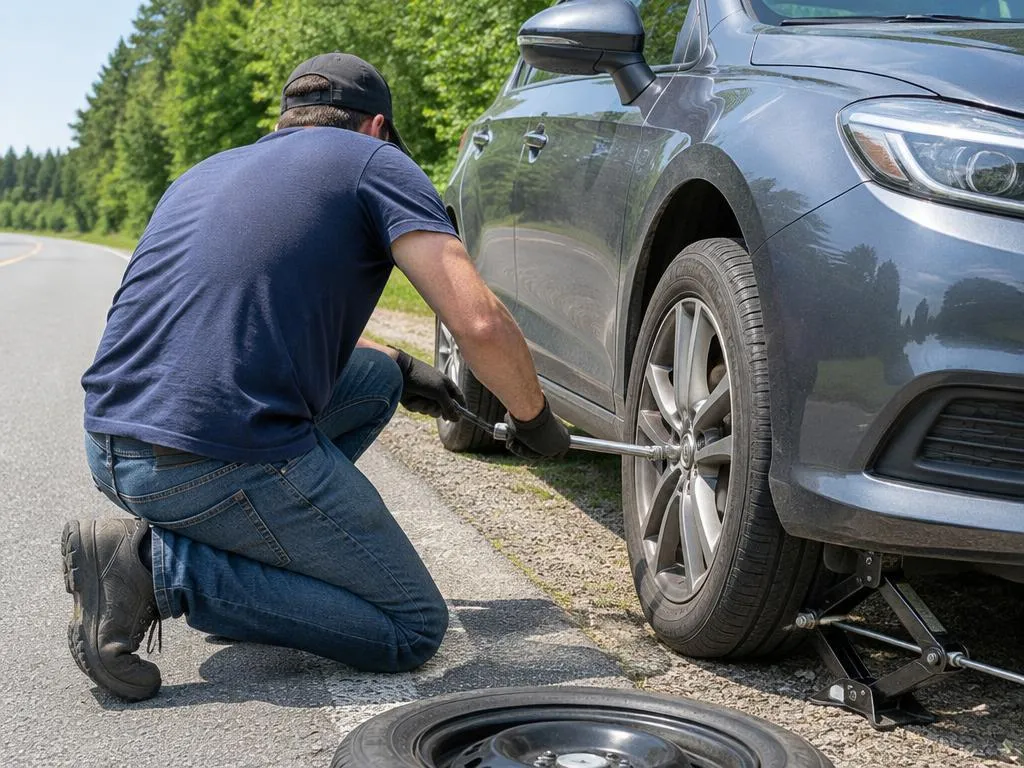
If it's a small nail or screw in the tread, a mobile tire repair can often fix it where the car is parked. If the tire is flat or the damage is on the sidewall, the safest option is to put on the spare. See Flat Tire Change.
Don't ignore the light
Low tires wear faster, grip worse on snow and ice, and can overheat and fail on the freeway. When the light comes on, check the pressure the same day.
UK Roadside helps drivers across the Twin Cities north metro, Minneapolis and St. Paul, Monday through Friday from 6 AM to 10:30 PM. Call (855) 799-4711.